

Testosterone is the engine behind a lot of what makes a man feel like himself. It drives energy, mood, muscle, libido, and mental clarity. When levels drop, men feel it in nearly every area of life. That is where TRT treatment comes in.
TRT, or testosterone replacement therapy, is one of the most talked-about options in men’s health today. It helps restore optimal testosterone levels for men who are clinically low. But with its growing use comes a growing number of questions. What are the real TRT side effects? Do the benefits of TRT for men outweigh the risks? And is it the right move for you?
This article breaks it all down. We cover the science, the risks, the results, and what it takes to do TRT the right way.
What Is TRT and Who Needs It?
TRT is a medical therapy designed to restore testosterone to healthy levels in men whose bodies are not producing enough on their own. This condition is known as hypogonadism, and it is more common than most people think.
Studies estimate that around 2 to 4 percent of men over the age of 40 have clinically low testosterone. And the number rises with age. On average, testosterone levels decline by about 1 to 2 percent every year after a man turns 30.
Low testosterone does not always cause obvious symptoms right away. But over time, men with low T often notice a pattern of changes that affect daily life.
Common Low Testosterone Symptoms in Men
- Persistent fatigue even after a full night of sleep. Many men describe feeling exhausted, no matter how much rest they get.
- Low sex drive and difficulty with sexual performance. Libido is one of the first things to drop when testosterone falls.
- Mood swings, irritability, and symptoms of depression. Hormonal imbalance has a direct effect on emotional stability.
- Loss of muscle mass and increased body fat, especially around the belly. The body composition shift happens even in men who exercise regularly.
- Brain fog, poor concentration, and memory issues. Cognitive function is closely tied to testosterone levels.
- Decreased bone density over time. Low T accelerates the bone loss that comes with aging.
- Reduced motivation and drive in daily life. Men often describe feeling flat or disconnected from things they used to enjoy.
These symptoms can mirror other health conditions, which is why proper blood work and a physician evaluation are critical before starting any hormone optimization program. That is how responsible TRT therapy in Kansas City begins at Kansas Regencares.
The Real Benefits of TRT for Men
When TRT is prescribed correctly and monitored consistently, the results can be significant. Men across every age group report meaningful improvements in their day-to-day quality of life. Here is a closer look at what the research and clinical experience show.
More Energy and Better Mood
One of the first things men notice is a shift in their energy levels. Testosterone energy is real. Men on TRT often describe waking up feeling rested for the first time in years. The fatigue that once dragged them through the day begins to lift. Mood tends to stabilize as well. Anxiety, irritability, and feelings of depression commonly improve as testosterone rises back to a healthy range.
TRT and Libido Improvement
Low testosterone is one of the most common contributors to low sex drive and erectile dysfunction in men. TRT and erectile dysfunction research consistently shows that restoring testosterone levels improves sexual desire, performance, and satisfaction. For many men, this improvement in sexual health also has a ripple effect on confidence and relationships.
Muscle Mass and Fat Loss
Testosterone plays a direct role in how the body builds and maintains muscle. Testosterone therapy muscle mass research confirms that TRT helps increase lean muscle while reducing body fat, especially in the abdominal region. This is especially meaningful for men over 40 who feel like their body composition has shifted, no matter how much they exercise.
Bone Density Protection
Testosterone is critical for maintaining strong bones. Men with low T are at higher risk of osteoporosis and fractures as they age. Testosterone replacement and bone density studies show that TRT helps slow this bone loss and, in some cases, improves density over time.
TRT and Cognitive Function
The brain fog that comes with low testosterone is one of the most frustrating symptoms men deal with. Many patients on TRT report sharper focus, better memory recall, and clearer thinking within the first few months of treatment. Testosterone plays a real role in brain health, and restoring it to optimal levels often reflects in mental performance.
TRT Benefits for Men Over 40
Men over 40 often experience what is sometimes called andropause, the gradual hormonal decline that mirrors the female menopause experience. TRT benefits for men over 40 are well-documented and include better cardiovascular markers, improved testosterone energy, healthier body composition, and a stronger sense of overall vitality. For men asking is TRT worth it for men over 50, the answer often depends on the severity of symptoms and the quality of medical oversight they receive.
TRT Side Effects: The Honest Picture
No medical treatment is without risk, and TRT is no different. Understanding the TRT side effects ahead of time helps men make informed decisions and allows providers to monitor and manage issues before they become serious problems. The good news is that most TRT side effects are manageable with the right protocol and monitoring blood work on TRT.
Skin Changes and Acne
As testosterone levels rise, the skin can produce more oil. Acne is one of the most commonly reported early side effects, affecting a significant portion of users. Skin breakouts on the back, shoulders, and face are the most typical areas. In most cases, this is temporary and can be managed with topical treatments or a dose adjustment.
Increased Red Blood Cell Count
This is one of the more serious testosterone therapy risks to monitor. TRT stimulates the production of red blood cells, which can lead to a condition called polycythemia or erythrocytosis. When hematocrit levels rise too high, blood thickens, and the risk of blood clots increases. Testosterone therapy hematocrit levels need to be checked regularly through blood work. Studies estimate this occurs in more than 20 percent of men on TRT, but it is manageable with routine monitoring and, if necessary, therapeutic phlebotomy.
TRT and Fertility
This is a major concern for younger men. When external testosterone is introduced, the brain signals the body to reduce its own natural production. This suppresses sperm production and can reduce testicular size over time. TRT and fertility impacts are real and important to address before starting. Men who want to preserve fertility can use medications like HCG or enclomiphene alongside or instead of TRT.
TRT Estrogen Side Effects
Testosterone can convert to estrogen in the body through a process called aromatization. If estrogen rises too high, men can experience water retention, mood changes, and in some cases, breast tissue growth known as gynecomastia. Does TRT cause gynecomastia? It can, but it is typically manageable. Aromatase inhibitors are sometimes used to keep estrogen in check as part of the treatment protocol.
TRT and Sleep Apnea
TRT and sleep apnea have a complicated relationship. Some studies suggest TRT may worsen existing sleep apnea in certain men, while other research shows no significant change. Men who already have untreated sleep apnea are typically advised to address that condition first before starting testosterone therapy.
TRT and Prostate Health
TRT is contraindicated in men with active or untreated prostate cancer. However, recent research has shifted the conversation. Multiple studies, including those reviewed by the American Urological Association, have found that carefully monitored TRT does not significantly increase the risk of developing prostate cancer in healthy men. PSA levels need to be tracked, particularly in men over 50, as part of standard monitoring blood work on TRT.
TRT and Heart Health
Testosterone therapy and blood clots and cardiovascular concerns have been debated for years. Older studies raised concerns, but more recent clinical trials have been more reassuring. For men who are clearly testosterone-deficient, no significant increased risk of heart attack or stroke has been confirmed.
That said, TRT and heart health should always be assessed at baseline and monitored throughout treatment, especially for men with existing cardiovascular risk factors.
Does TRT Cause Hair Loss?
Testosterone converts to DHT (dihydrotestosterone), which can accelerate hair loss in men who are genetically predisposed to male pattern baldness.
Does TRT cause hair loss in everyone? No. But if you have a family history of hair loss, TRT may speed up that process. Your physician can discuss options to mitigate this if it is a concern.
TRT Before and After: What Results Look Like Over Time
One of the most searched topics around TRT is the TRT before and after timeline. Men want to know when they will feel different and what that difference will actually look like.
Here is a realistic overview of what TRT results tend to look like:
- Weeks 1 to 4: Most men notice improved energy, better sleep quality, and early mood stabilization. These are often the first signs TRT is working.
- Weeks 4 to 8: Libido typically improves. Some men notice early changes in body composition and stamina.
- Months 3 to 6: Muscle gain becomes more noticeable, especially when combined with regular exercise. Fat loss begins to accelerate. Mental clarity sharpens.
- Months 6 to 12: Bone density improvements begin. Emotional balance stabilizes. Most men report significant improvements in overall testosterone therapy quality of life.
How long does TRT take to work varies from man to man. The standard TRT protocol involves bloodwork at 30 days, then at 3, 6, and 12 months to assess how you are responding. From there, monitoring continues every six months.
TRT Risks and Benefits: How to Weigh the Decision
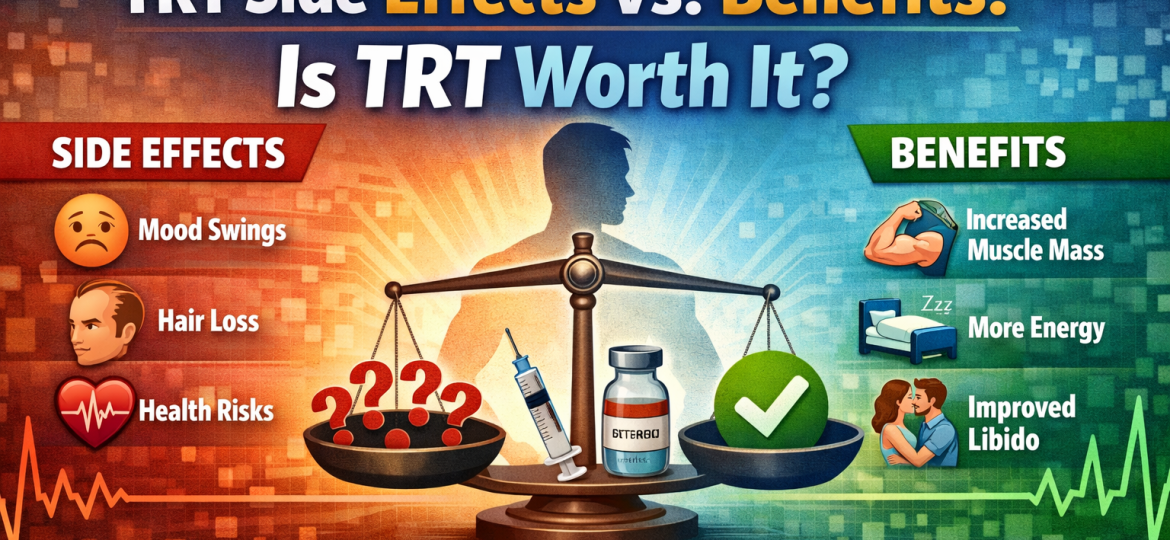
The honest answer to whether TRT is worth it is: it depends. For men with clinically confirmed low testosterone and real symptoms affecting their quality of life, the benefits of TRT typically outweigh the risks when treatment is properly supervised.
For men with borderline levels and mild symptoms, the picture is more nuanced. Low T treatment risks are real but manageable. The key variable is how TRT is delivered and who is overseeing it.
Here is a summary of TRT risks and benefits to consider:
- Benefits: restored energy, improved mood, stronger libido, muscle growth, fat loss, better cognition, and improved bone health.
- Risks: increased red blood cell count, acne, potential fertility impact, estrogen-related side effects, and possible worsening of sleep apnea in at-risk men.
- Risk mitigation: regular blood work, physician oversight, dose adjustment, and a personalized hormone therapy plan.
TRT vs Natural Testosterone Boosters: Is There a Comparison?
The supplement market is flooded with products claiming to boost testosterone naturally. While some lifestyle interventions, including resistance training, sleep optimization, stress reduction, and zinc intake, can modestly support testosterone production, they are not a substitute for TRT in men with diagnosed hypogonadism.
TRT vs natural testosterone boosters is not really a fair comparison when testosterone deficiency is clinical. Over-the-counter supplements have not been shown in clinical trials to restore testosterone levels in men with a true deficiency significantly. If your blood work confirms low T, working with a physician-led program is the appropriate path.
Testosterone Injections vs Pellets vs Cream: Which Method Is Right?
TRT comes in multiple delivery forms, and finding the right TRT dose and method depends on your lifestyle, preferences, and how your body responds. Each method has pros and cons.
- Testosterone injections: The most common and cost-effective method. TRT injection frequency is typically once every one to two weeks. Levels can fluctuate slightly between injections, which some men notice as energy highs and lows.
- Testosterone pellets: Implanted under the skin for a slow, steady release over three to six months. Minimal upkeep and no peaks or valleys in hormone levels.
- Gels and creams: Applied to the skin daily for consistent absorption. Convenient but requires care to avoid skin contact transfer to others.
- Patches: Applied once or twice daily for 24-hour hormone release. Easy to use, but can cause skin irritation in some men.
A physician-led TRT program will evaluate your lifestyle, health history, and goals to recommend the best fit for you. This is exactly what personalized hormone therapy Kansas patients receive at Kansas Regencares.
Signs TRT Is Working
After starting treatment, men often want to know the signs TRT is working. While blood work gives the clearest picture of optimal testosterone levels for men, there are subjective improvements to watch for as well.
- You wake up with more energy and feel rested without needing caffeine to function.
- Your mood is more stable, and you feel less irritable or anxious.
- Sex drive returns, and sexual performance improves.
- Workouts feel more productive, and muscle recovery is faster.
- Mental fog lifts and focus improves noticeably.
- Confirmed by lab results showing testosterone levels within the optimal therapeutic range.
If you are not seeing results after three to six months, your physician may reassess the dose or consider whether low testosterone was truly the root cause of your symptoms.
Can TRT Side Effects Be Reversed?
In most cases, yes. Many of the side effects associated with TRT are dose-dependent or formulation-related. Adjusting the protocol, switching delivery methods, or adding a supportive medication can address most issues without stopping treatment entirely.
In cases where TRT is stopped completely, most side effects resolve over time. Natural testosterone production gradually returns, though the timeline varies. Some men experience a transition period when stopping that includes fatigue or mood changes as the body readjusts.
This is one reason why knowing when to stop TRT is a conversation best had with a qualified physician. Decisions about continuing, adjusting, or ending TRT should always be guided by lab results and symptom evaluation together.
Why Physician-Led TRT Matters
The difference between safe, effective TRT and a problematic experience often comes down to who is managing the therapy. Physician-led TRT in Kansas at a clinic like Kansas Regencares means every step of the process is overseen by medical professionals who specialize in hormone optimization and regenerative medicine for men’s health.
Men searching for a TRT clinic near me or the best TRT provider in Kansas should look for a few key things. First, the clinic should require full blood work before prescribing. Second, follow-up monitoring should be built into the program, not optional. Third, the team should be able to adjust treatment based on how you respond, not just provide a one-size-fits-all protocol.
Kansas Regencares, a leading men’s wellness clinic Kansas patients trust, offers personalized hormone therapy Kansas plans built around your unique biology. Whether you are just starting to explore TRT therapy in Kansas City or you have had a poor experience elsewhere and want to start fresh, their team provides the kind of individualized care that makes a real difference in outcomes.
Their hormone replacement therapy Overland Park and testosterone therapy Overland Park programs are designed with the patient in mind. No cookie-cutter dosing. No unsupervised therapy. Just a clear, physician-guided path to feeling better backed by science.
Conclusion
For men who are genuinely low in testosterone and suffering the real effects of testosterone deficiency, TRT is not just worth it. For many, it is life-changing. The benefits of TRT for men, including better energy, stronger libido, improved body composition, sharper thinking, and a higher quality of life, are well-supported by medical research.
The TRT side effects are real but manageable. The key is working with a qualified, physician-led program that monitors your blood work, adjusts your protocol as needed, and treats you as an individual.
TRT is not a shortcut or a magic fix. It is a medical treatment with a proper process behind it. When that process is followed correctly, the TRT results speak for themselves.
Ready to find out if TRT is right for you? Kansas Regencares is a trusted TRT clinic Kansas City men rely on for expert, physician-led hormone care.
Schedule your consultation with Kansas Regencares today and take the first step toward feeling like yourself again.